
Open Category: Photojournalism / Story (AMATEUR) - HONORABLE MENTION
I Battenti Rossi di Verbicaro

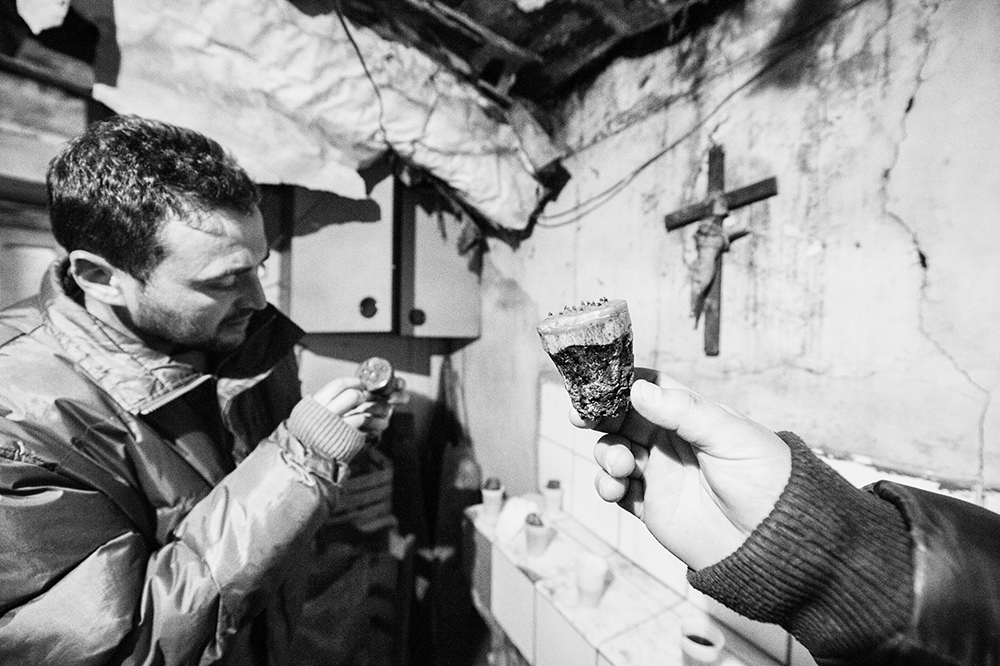

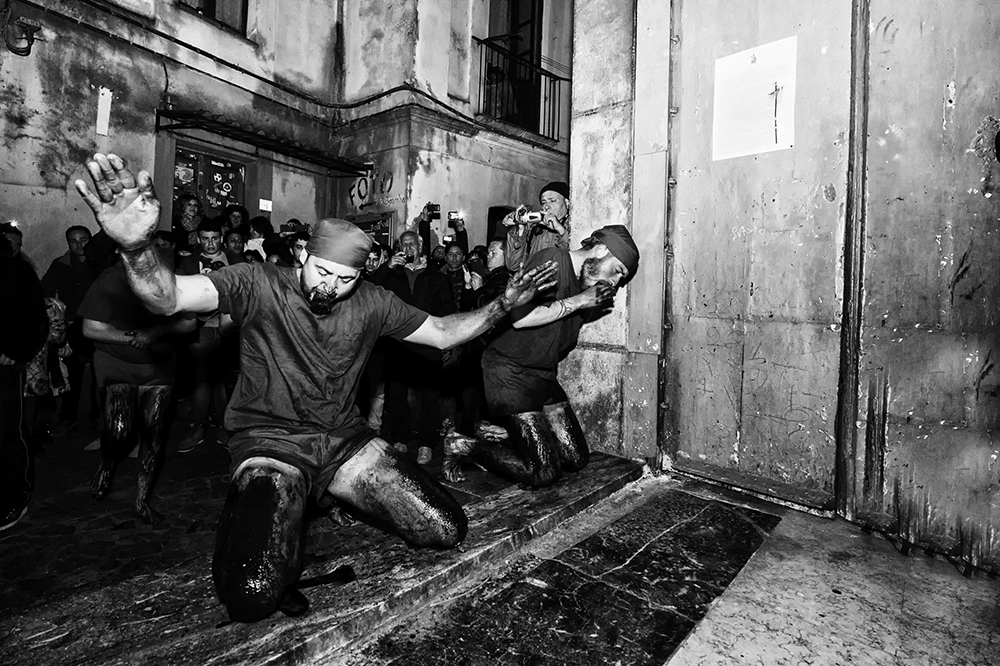


Photo © Vincenzo Ianniciello

Support this photographer - share this work on Facebook.
It is one of the oldest rituals and bloody tradition of holy week of the south of Italy.
Despite being associated with the solemn and religious rites of Holy Week, one of the Flying Verbicaro draws origins from issues of social history and of the small rural village policy perched on the slopes of Pollino.
Their first appearance was in the first decade of 900 verbicarese when the community was hit by a severe outbreak of which were held liable the city authorities.
The movements of rebellion that sprang were quelled by force the royal army and caused dozens of deaths among the population.
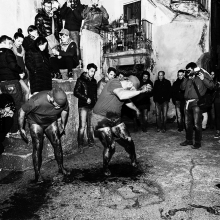
The self-flagellation became thus a form of peaceful protest carried out by groups of people during the Easter period running wildly for city streets, beating to a pulp.
Even amid the strength of the Church, this ritual has come to this day although with different inspiration than in the past.
The ritual takes place at the height of Santa verbicarese week, just in the two hours before the traditional procession of the cross.
Immediately after the SS. Commissioning coena domains celebrated at the Cathedral Church dedicated to Our Lady of Graces its doors, divided into two or more groups, gather at a catuvo to have dinner together and prepare for the ritual wearing skimpy clothes of a bright red color.
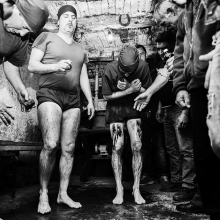
Before embarking on the path they are performed some physical exercises aimed at speeding up the circulation of blood.
The typing is done by means of cardillo, a shaped piece of cork in a conical shape whose larger surface area are driven into sharp fragments of glass heat sealed with wax.
Elderly former swing help the chosen spraying wine on their thighs, pointing out the most appropriate place to flogging.
At the stroke of the twenty-third hour of the Holy Thursday its doors leave catuvo and begin their run barefoot along what will be the path of the cross.
I will walk three times focusing on the parvis of the Mother Church and the Church of St. Joseph, who will flood with their blood as a sign of respect and devotion.
Are moments of intensity and rawness unique.
Moments in which in the eyes of these young swing states clearly the pride of belonging to the people and the deep devotion to Our Lady and St. Joseph.
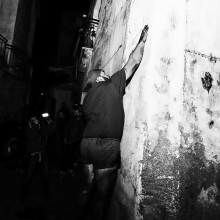
In Largo Maddalena they linger to leave the imprint of their bloody hand on the side of the wall where there is a mural depicting the Virgin.
The rite concludes, for those who do not surrender before since taken ill at a source where fresh water and pure spring merges with sash blood.
Fotografo autodidatta e ispirato ai più grandi fotografi del novecento, il suo approccio fotografico con la realtà è di tipo documentaristico e reportagistico.
Da attento testimone del proprio tempo, la macchina fotografica è parte integrante del suo bagaglio, pronta a cogliere quegli attimi della quotidianità che grazie alla fotografia assumono interesse e particolarità.
Amante delle tradizioni popolari italiane, da anni segue un progetto fotografico a lungo termine finalizzato a documentare le feste religiose e le manifestazioni di folklore dell'ampio e variegato patrimonio storico e culturale del popolo italiano.
Un lungo - e per ora non terminato - viaggio attraverso il folklore, le usanze e le antiche tradizioni popolari fatto di tante tappe che ripercorrono l'intera penisola italiana, dalle feste patronali del sud, a forte connotazione religiosa, alle più folkloristiche rievocazioni storiche e cavalleresche del centro-nord Italia, con l’ambizioso fine cogliere quei segni rivelatori della cultura e dell'identità di una comunità le cui origini risalgono in epoche assai remote, e di individuare eventuali contaminazioni del progresso tecnologico e di globalizzazione dei giorni nostri.
Il viaggio, appunto, è l' altra sua grande passione che lo porta spesso in giro per il mondo con la stessa curiosità di voler scoprire, possibilmente comprendere, lo stile di vita, la storia e la cultura di altri popoli, aspetti che poi racchiude in libri fotografici auto-prodotti e venduti attraverso i canali di e-commerce Amazon e Blurb.
Trasmette la sua grande passione tenendo corsi basici di fotografia e presentando le sue opere presso varie associazioni fotografiche.
E' approdato al digitale nel 2009 ma non ha mai smesso di fotografare e sviluppare in maniera analogica, un retaggio culturale che influenza tuttora il suo modo di concepire e praticare la fotografia che, oltre a non essere smodatamente prolifica, è essenzialmente - ma non esclusivamente - monocromatica.
BACK TO GALLERY
It is one of the oldest rituals and bloody tradition of holy week of the south of Italy.
Despite being associated with the solemn and religious rites of Holy Week, one of the Flying Verbicaro draws origins from issues of social history and of the small rural village policy perched on the slopes of Pollino.
Their first appearance was in the first decade of 900 verbicarese when the community was hit by a severe outbreak of which were held liable the city authorities.
The movements of rebellion that sprang were quelled by force the royal army and caused dozens of deaths among the population.
The self-flagellation became thus a form of peaceful protest carried out by groups of people during the Easter period running wildly for city streets, beating to a pulp.
Even amid the strength of the Church, this ritual has come to this day although with different inspiration than in the past.
The ritual takes place at the height of Santa verbicarese week, just in the two hours before the traditional procession of the cross.
Immediately after the SS. Commissioning coena domains celebrated at the Cathedral Church dedicated to Our Lady of Graces its doors, divided into two or more groups, gather at a catuvo to have dinner together and prepare for the ritual wearing skimpy clothes of a bright red color.
Before embarking on the path they are performed some physical exercises aimed at speeding up the circulation of blood.
The typing is done by means of cardillo, a shaped piece of cork in a conical shape whose larger surface area are driven into sharp fragments of glass heat sealed with wax.
Elderly former swing help the chosen spraying wine on their thighs, pointing out the most appropriate place to flogging.
At the stroke of the twenty-third hour of the Holy Thursday its doors leave catuvo and begin their run barefoot along what will be the path of the cross.
I will walk three times focusing on the parvis of the Mother Church and the Church of St. Joseph, who will flood with their blood as a sign of respect and devotion.
Are moments of intensity and rawness unique.
Moments in which in the eyes of these young swing states clearly the pride of belonging to the people and the deep devotion to Our Lady and St. Joseph.
In Largo Maddalena they linger to leave the imprint of their bloody hand on the side of the wall where there is a mural depicting the Virgin.
The rite concludes, for those who do not surrender before since taken ill at a source where fresh water and pure spring merges with sash blood.
About author:
Classe 1969, nato in provincia di Salerno ove ha vissuto fino alla matura età conseguendo studi a indirizzo classico, si trasferisce in Toscana ove attualmente vive e lavora e ove, stimolato dal vasto patrimonio artistico e paesaggistico di cui la regione è dotata, ha sviluppato il suo adolescenziale interesse per la fotografia.Fotografo autodidatta e ispirato ai più grandi fotografi del novecento, il suo approccio fotografico con la realtà è di tipo documentaristico e reportagistico.
Da attento testimone del proprio tempo, la macchina fotografica è parte integrante del suo bagaglio, pronta a cogliere quegli attimi della quotidianità che grazie alla fotografia assumono interesse e particolarità.
Amante delle tradizioni popolari italiane, da anni segue un progetto fotografico a lungo termine finalizzato a documentare le feste religiose e le manifestazioni di folklore dell'ampio e variegato patrimonio storico e culturale del popolo italiano.
Un lungo - e per ora non terminato - viaggio attraverso il folklore, le usanze e le antiche tradizioni popolari fatto di tante tappe che ripercorrono l'intera penisola italiana, dalle feste patronali del sud, a forte connotazione religiosa, alle più folkloristiche rievocazioni storiche e cavalleresche del centro-nord Italia, con l’ambizioso fine cogliere quei segni rivelatori della cultura e dell'identità di una comunità le cui origini risalgono in epoche assai remote, e di individuare eventuali contaminazioni del progresso tecnologico e di globalizzazione dei giorni nostri.
Il viaggio, appunto, è l' altra sua grande passione che lo porta spesso in giro per il mondo con la stessa curiosità di voler scoprire, possibilmente comprendere, lo stile di vita, la storia e la cultura di altri popoli, aspetti che poi racchiude in libri fotografici auto-prodotti e venduti attraverso i canali di e-commerce Amazon e Blurb.
Trasmette la sua grande passione tenendo corsi basici di fotografia e presentando le sue opere presso varie associazioni fotografiche.
E' approdato al digitale nel 2009 ma non ha mai smesso di fotografare e sviluppare in maniera analogica, un retaggio culturale che influenza tuttora il suo modo di concepire e praticare la fotografia che, oltre a non essere smodatamente prolifica, è essenzialmente - ma non esclusivamente - monocromatica.
BACK TO GALLERY
